
Arrival day. Land in Kathmandu, clear immigration, and meet your driver for the short transfer to Dwarika’s Hotel — a quiet oasis of courtyards in the middle of the city. In the evening your lead guide joins you for a welcome supper and walks through the days ahead.
The long-form itinerary, day by day, in our own words.
Fifteen days, eleven on foot. Each day written the way we actually walk it.
Fly to Lukla, walk to Phakding
The classic start. A 35-minute flight lands you on Lukla’s famously short runway. After tea, the trail drops gently through pine forest and Sherpa farmland to Phakding — a deliberately easy first day to let the legs remember what they are for.
Phakding to Namche Bazaar
The first real test. The trail crosses five high suspension bridges over the Dudh Koshi, then climbs the long switchback wall into Namche Bazaar — the amphitheatre town that is the Khumbu’s commercial heart. Bakeries, gear shops and the first sight of Everest’s summit above the ridge.
Acclimatisation — Namche
Rest days here are active recovery. We climb to the Everest View Hotel (3,880 m) for the first full panorama of Everest, Lhotse and Ama Dablam, then descend for a slow lunch and an afternoon of cafés, the Sherpa museum, and altitude games of cards.
Namche to Tengboche
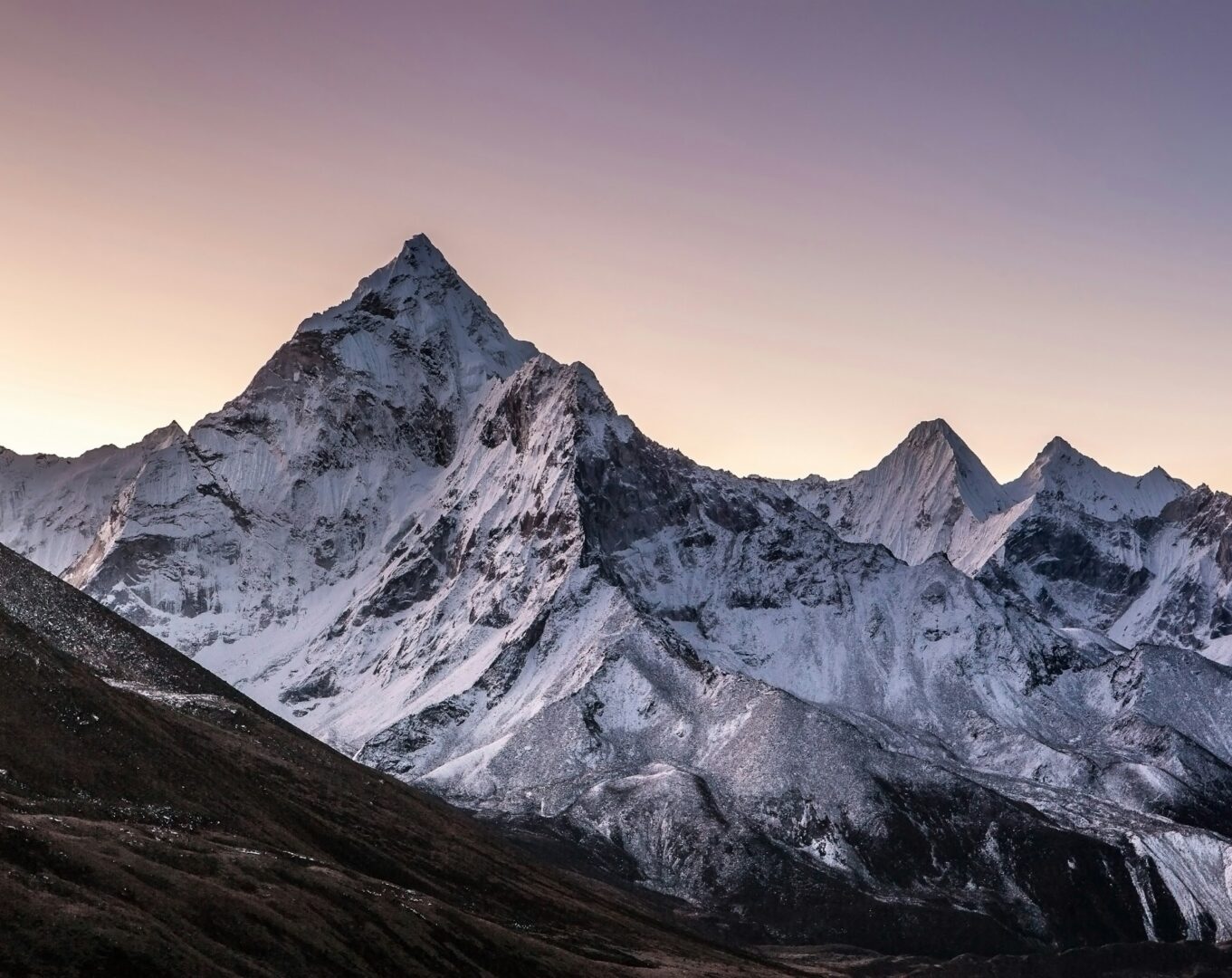
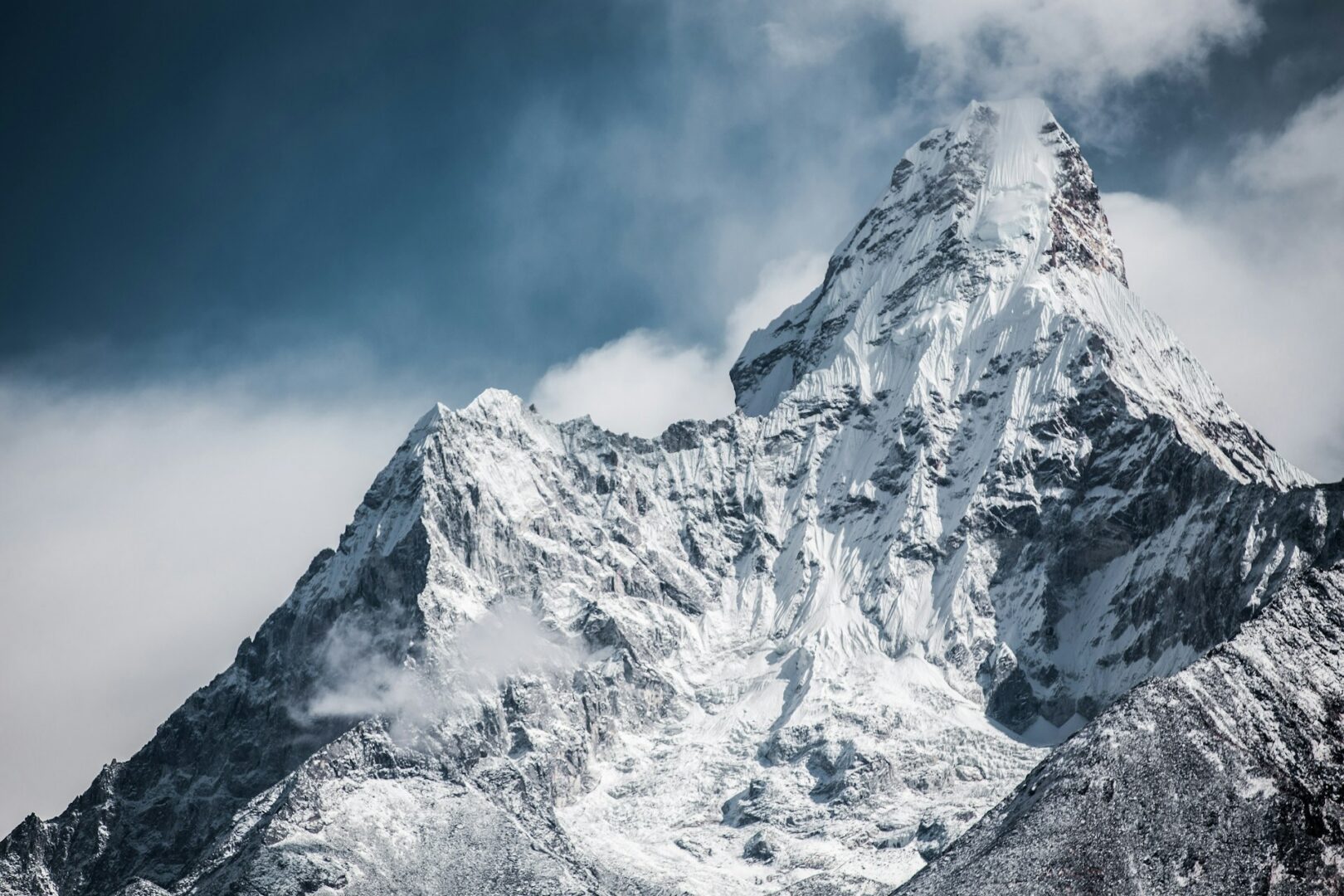
One of the finest walking days in the Himalaya. The trail contours high above the Dudh Koshi, then climbs through rhododendron to Tengboche — a monastery on a saddle with Ama Dablam standing sentinel. If the lamas allow it, we sit in on evening prayers.
Tengboche to Dingboche
The trees fall away today. You descend to the river at Deboche, pass the stone walls of Pangboche, and climb into the wide, stone-walled fields of Dingboche — the last permanent village before the high valley. Ama Dablam fills the sky to the south.
Acclimatisation — Dingboche
The highest of our rest-day walks. We climb the Nangkartshang ridge to 5,083 m — a superb acclimatisation push with views of Makalu and Lhotse — then descend to Dingboche for tea, sun and rest. Your body will thank you tomorrow.
Dingboche to Lobuche
A quieter, graver day. The trail climbs past Dughla to the ridge of chortens and plaques that remember climbers lost on Everest — a place of wind and silence — then continues to the small cluster of lodges at Lobuche.
Lobuche to Gorak Shep & Everest Base Camp
The day the whole walk has been building towards. You reach Gorak Shep by late morning, drop your pack, and push on over the Khumbu glacier’s moraine to Base Camp — a city of tents at the foot of the Khumbu Icefall. Sign the logbook, stand very still, and take it in.
Kala Patthar sunrise, descend to Pheriche
We start in the dark, head-torches on, to reach Kala Patthar’s summit for sunrise — the classic, impossible view of Everest’s full south face turning gold. After the descent and breakfast, we walk down-valley to the warmer air of Pheriche.
Pheriche to Namche
Descending is fast and strangely euphoric — every metre down is richer air. You pass Tengboche again, climb the last short rise, and drop into Namche for the best dinner of the trek and a very good night’s sleep.
Namche to Lukla
The last day on foot. Down the switchbacks, across the five bridges, and along the river to Lukla, where the team gathers for a farewell supper with the porters and guides. Boots off. Nobody is ever quite ready for it to be over.
Fly Lukla to Kathmandu
The 35-minute flight back to Kathmandu. We build this day in as a weather buffer — if the mountains keep their planes on the ground, this is the day that saves the schedule. Otherwise: a free afternoon in the city.
Kathmandu — a free day
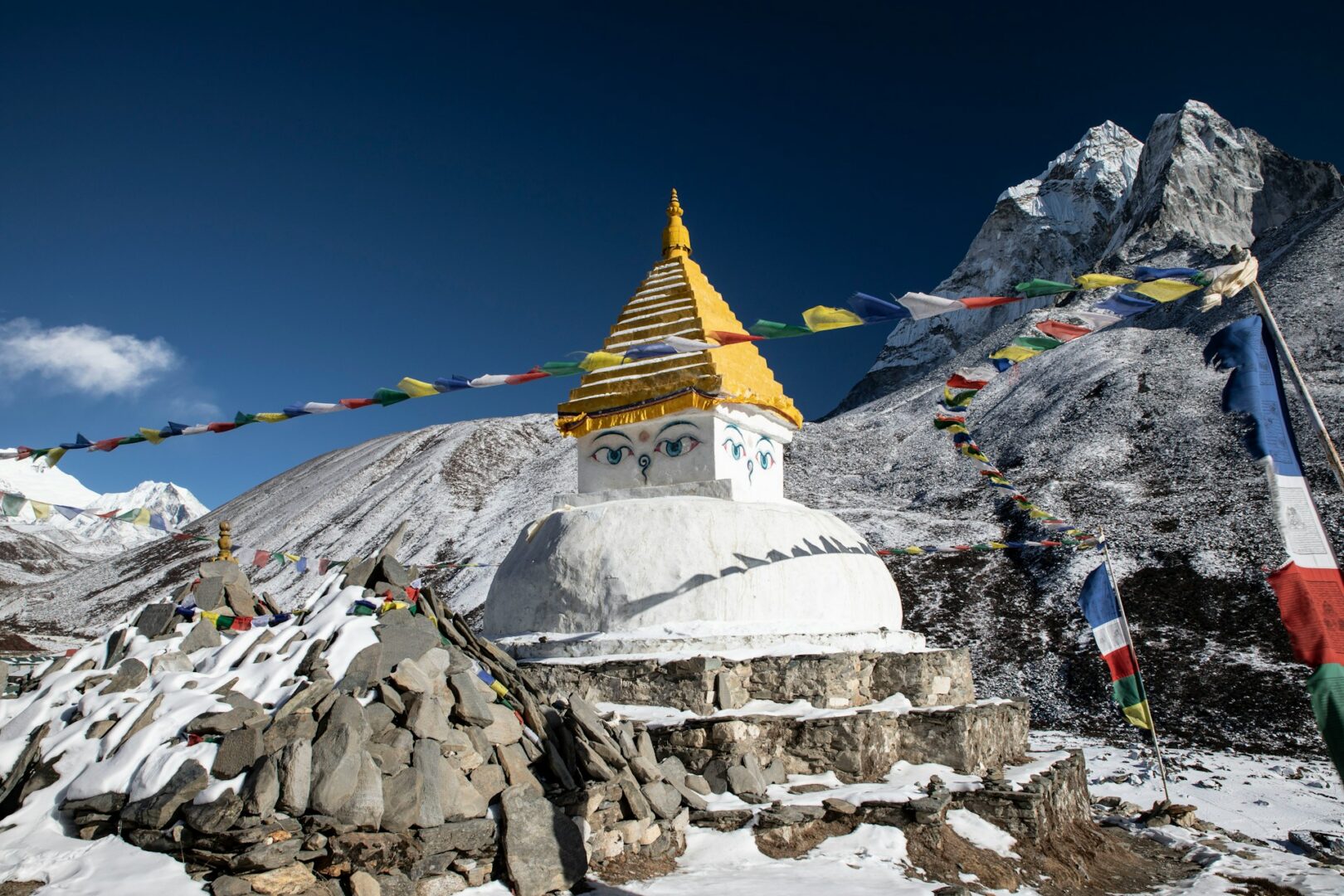
A slow morning — a guided walk through Patan’s durbar squares or Boudhanath’s stupa if you wish — then the afternoon is yours for tailors, thankas, or simply lying down. Farewell supper in the evening.
Departure
Private transfer to Tribhuvan International for your onward flight. If your flight is late, the day room is yours until evening.
Every day above is written the way we actually walk it — unhurried, with time for tea, prayer wheels, and the view. If the weather, the mountain, or your own body asks for a change, the route below bends; it never breaks. Your guide carries the final word, and you carry nothing but a day-pack.


