
The journey, not a destination
People walk to Everest Base Camp for the mountain. They come home talking about the people — the sherpa families of the Khumbu who have guided, fed and sheltered travellers for a century. We have walked this valley for twenty years, and every itinerary we write is shaped by that: longer days in the villages, time for a second cup of tea, and a pace that lets the place speak.
Base Camp is the headline. The journey is the story.
The route, told in bridges and passes
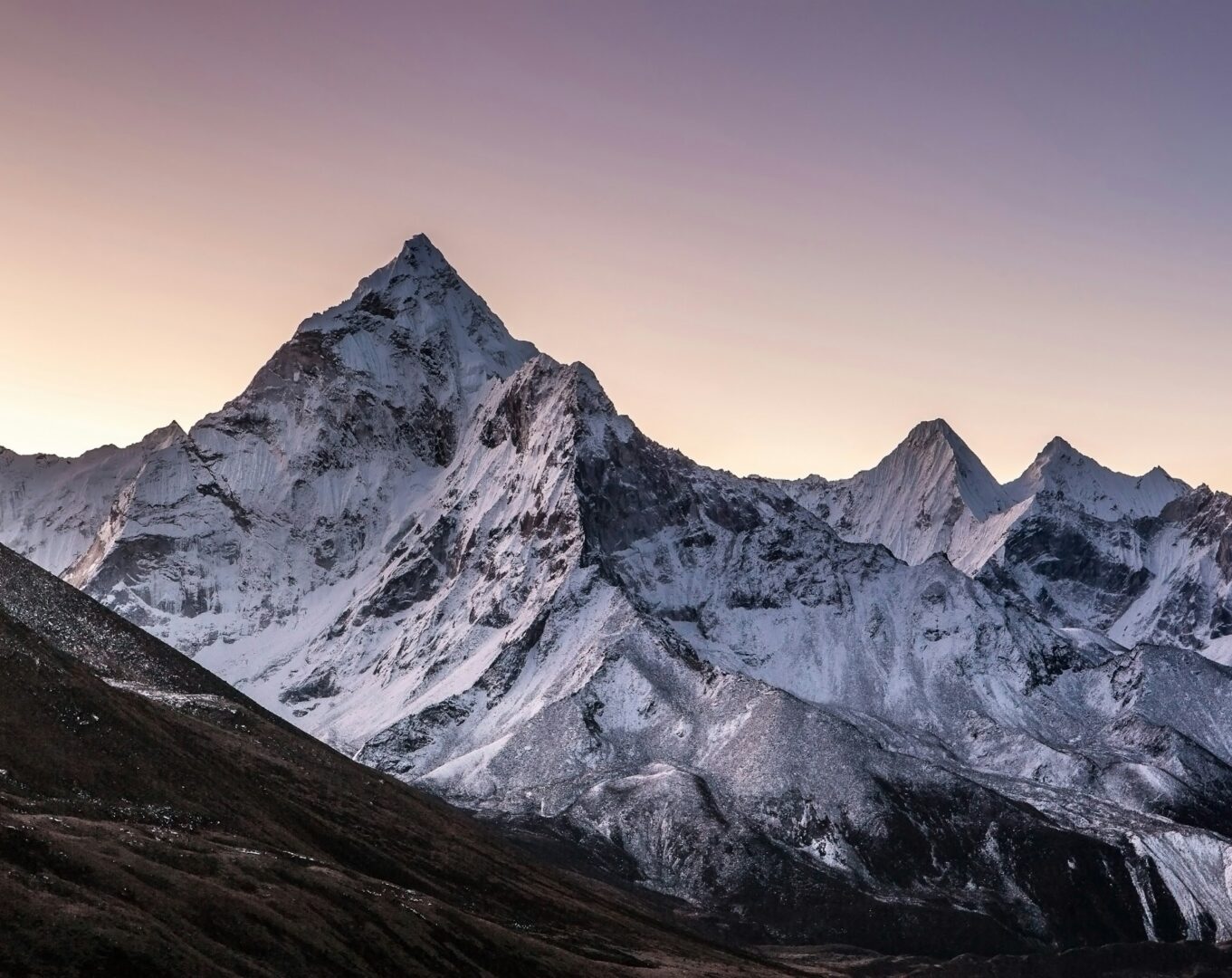
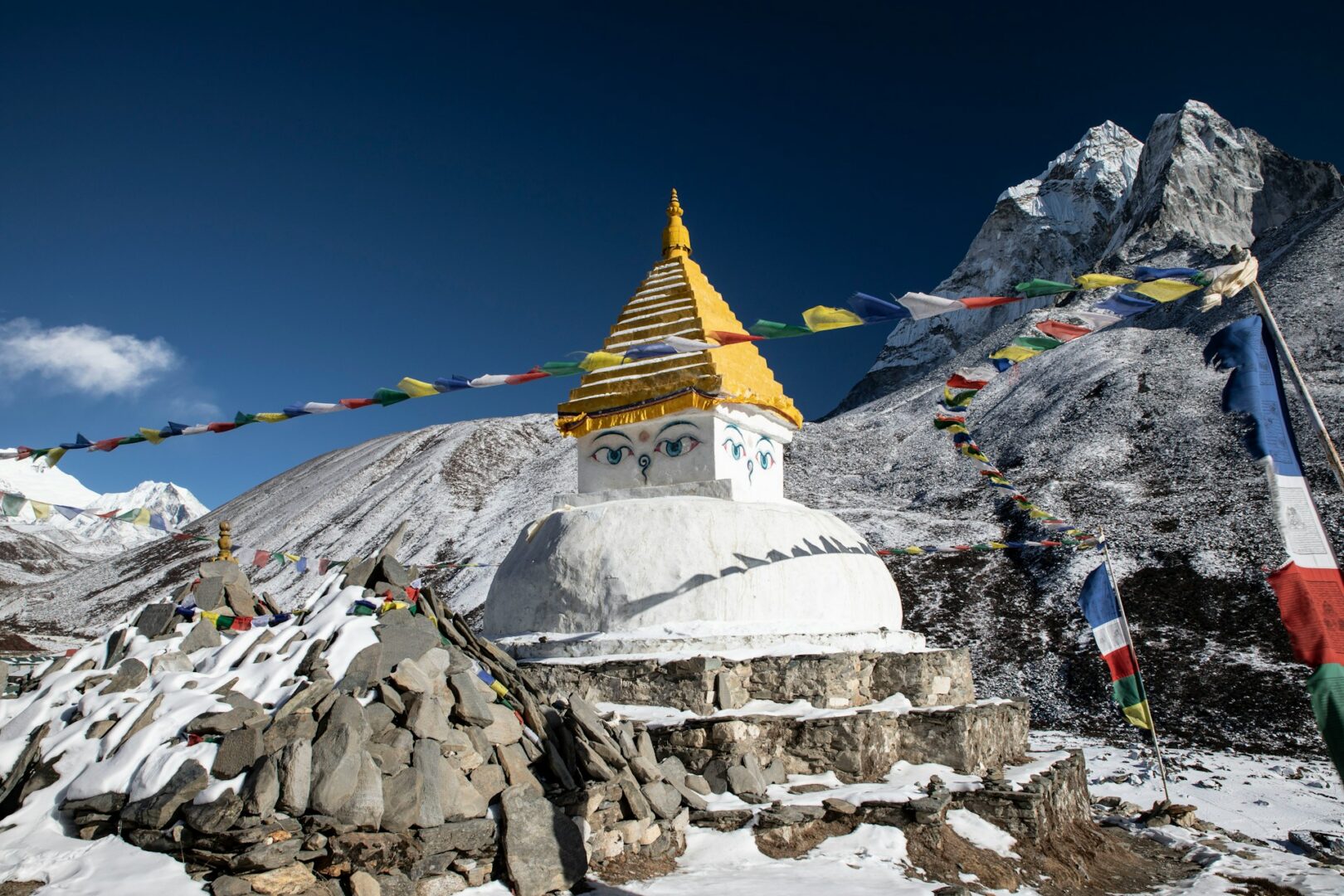
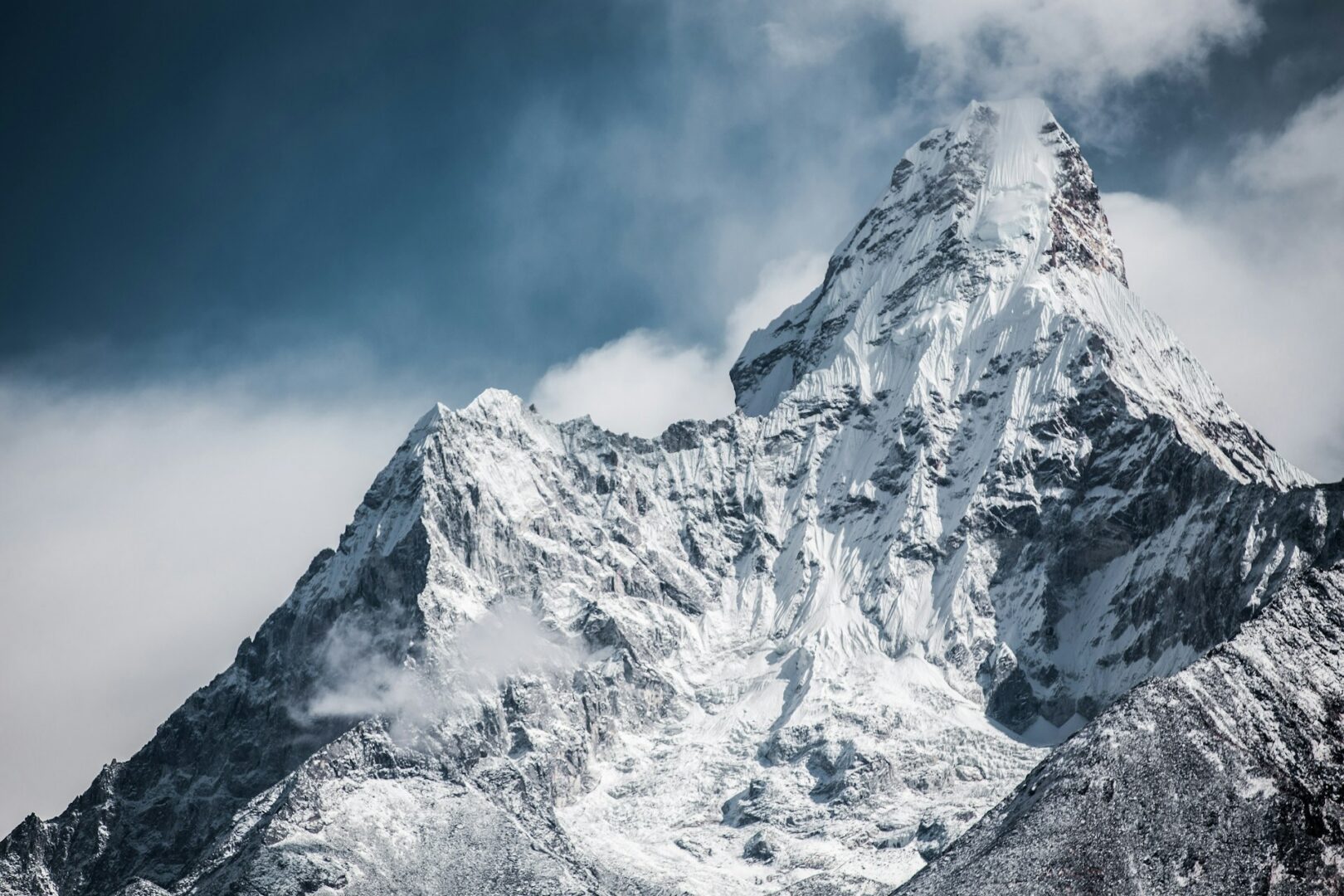
From Lukla’s short runway the trail follows the Dudh Koshi river through pine forest and past mani walls carved with the prayer om mani padme hum. You cross high suspension bridges, climb the long switchbacks into Namche, and from there the horizon opens — first Tengboche, then Ama Dablam’s perfect pyramid, then the giants of the upper valley.
Six landmark days
Namche, Tengboche, Dingboche, Lobuche, Gorak Shep and finally Kala Patthar — six places that mark the arc of the trek, each with its own weather, its own light, its own rhythm.
Altitude — the quiet science of arriving well
Above 3,000 metres the body needs time. Our fifteen-day tempo is not luxury padding; it is the difference between arriving tired and arriving ready. Three rest days — Namche, Dingboche and a buffer in the descent — allow your body to acclimatise properly. We check pulse-oximetry every evening and our guides are trained to read the early signs of altitude illness long before they become serious.
The people who make this walk possible
Your lead guide is Khumbu-born and has crossed Kala Patthar more times than they can count. Behind them is a quiet team: assistant guides, porters, a cook who can make dal bhat taste like a homecoming, and the tea-house owners who have hosted our guests for two decades.
Where you sleep, what you eat
Lodging is in hand-picked tea-houses and lodges — the best room in every village, with a private room wherever one exists. Meals are full board on trek: hot breakfasts, packed lunches, and three-course dinners built around dal bhat, the trekker’s fuel.
Seasons — when to walk, when not to
The two windows are spring (March to May), for rhododendron forests and crisp skies, and autumn (September to November), for the clearest mountain visibility and cooler nights. We do not run this trek in monsoon, and we will tell you honestly if your dates do not serve you.
Our ethics on this mountain
One per cent of every trip price funds the Khumbu Schools Initiative. We hire locally, pay fairly, and carry out everything we carry in. This mountain gives us our living; we try to give something back.